Tuesday, December 21, 2010

Why Grandpa Has Two Birthdays and Grandma Graduated So Young

I remember, as a little kid, looking at my mother's list of extended family birthdays and being a little puzzled that my grandpa Gill came up in March and May. Why did he have two birthdays? I asked my mother. She couldn't remember exactly but said that one was from Indian government records and the other was the one his mother said. I figured the government was just wrong--after all, a mother would remember the month, right?--but last night, Kira was having Nicole make a list of birthdays in our extended family, and Grandpa told her the story himself, and it went something like this:

When Grandpa Gill was a little boy, he liked to follow his cousin Balwant everywhere. So even though Balwant was three years older than him, as soon as Grandpa was big enough, he followed Balwant to school. Grandpa was tall for his age, and pretty smart, so they were happy to let him stay, but they needed paperwork for him from his mother. She was glad her son was going to school willingly (as a boy, her husband had snuck back from school until his parents gave up on his education), so she decided not to fill out that paperwork in a way that would keep him out. Instead of listing his birthday accurately as March of his birth year, she moved it forward to May of the previous year. The new birthday stuck on all his school records and related records and it wasn't until he needed a birth certificate to get into the United States that he got his old birthday back.

And so it was that the March birthday the government initially said he had was right, while the May birthday his mother gave him was designed specifically to let him follow his cousin to school.

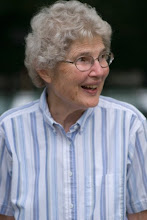
This is particularly funny because a similar thing happened to my grandmother: when she was little, she insisted on doing everything her big brother Carl did. You'd have to ask her what all they'd done together by the time she was four or five: I vaguely recall stories involving canals, monkeys, a movie theater in San Marcos--that was a golden age of childhood wandering, I suppose. In any case, when my grandmother found out that Carl would be going to school at the end of the summer, she announced that she would go with him. Her mother told her that's not the way it worked: Carl could go this year, but she would have to wait. My grandmother told her mother that anything Carl could do, she could do. After the umpteenth iteration of this argument, my great-grandmother decided she would let the school tell her daughter that she was too young.

But that summer, the family moved to a small Texas town with so few students, no one asked any questions about age. My grandma followed her brother Carl to school and got to stay.

And so it was that my grandma started school a year early without even needing an extra birthday.

Thursday, October 28, 2010

The Year in Review (part three)

July

Since I had defended my thesis in April, I looked like myself by July:


That's right. In order to look like myself I need not only a beard, but also a pink crown.

Nicole's dad called up early the month saying that Paul McCartney was coming to perform in Salt Lake and that he was going to go. He invited us to go with him: I encouraged Nicole to go in spite of the expense with this argument: she shouldn't miss the chance to see McCartney with her dad. See, my father in law plays and teaches guitar and grew up on the Beatles. Rock and Roll history is part of his personal lore. Sure enough, at the concert he could identify each new guitar Paul brought out and sometimes predict based on the guitar what song was coming next.


George and Nicole had a great time at the concert. It'll also be fun to tell Elijah that before he was born, he got to hear a live performance by Paul McCartney.

Also in July: Kira's birthday party. She decided to have a "wicked witch" party, so all the twenty-two kids (mostly relatives plus some friends) came dressed up and went on a scavenger hunt. If you ever get a good excuse, I definitely recommend going from door to door in costume on July. The disorientation on people's faces is priceless.

The experience resonated with my own childhood in one amusing way: when they'd call him weird or scary, my dad used to tell his seventh-grade students that every day was Halloween at our house. And this July, it sort of was!

August

August turned into a sort of flocking month. My aunt Su and her family had planned to come for Utah to camp, my uncle David and his family decided to stop by on their move from San Jose to London, my aunt Janice and uncle Paul were already in town and my aunt Sheila decided that if so many other people were there, she'd better drive down from Idaho. My mom didn't want to be left out, so she and my brother Matt bought plane tickets in. That meant all my mom's siblings except for her brother Stephen (located in northern England) were there. Her son (my brother) Stephen did arrive, however, as he and his wife, recently returned from two-year contracts in Thailand, moved their old stored possessions from Columbus to grad school in Oakland.

With all the comings and goings, we failed to get pictures of many important people, but did capture some nice moments.

Here, kids from four different "tiny families" are wading in the tiny canal at a local nature park:


Later, we had a "gradower": a graduation party for me and a shower for the coming baby. Karaoke is, of course, an important Wilkes family gradower tradition. It was fun to see my side of the family join in:


We sang past dark, both onstage and from the audience area on the grass. I love this picture of my wife and my mom:


All too quickly, over course, everyone had dispersed to their various corners of world and sky. Matt was back soon, though, on his way to a mission in India. We picked him up at the airport and had time for lunch with the cousins his age before we dropped him off for his three-week intensive training in the Missionary Training Center:


Since LDS missionaries spend are gone for two full years before they come home, many families get very emotional at the parting:


as you can see, we are no exception!

September and October

We had made a short list of first and middle names to take with us to the hospital because we wanted to see our son before deciding for sure.

His name is Elijah Akal. In Mormonism, the prophet Elijah plays a major role: the Biblical prediction that he would return to "turn the hearts of the fathers to the children and the hearts of the children to the fathers" is seen as having been fulfilled. Our doctrine of eternal families is based in our belief in the visit of Elijah to latter-day prophets in 1836.

"Akal" is a Sikh name meaning "timeless" (the word "kal" means both "yesterday" and "tomorrow" so "akal" is "without yesterdays or tomorrows"). Because the world has changed so much, we can feel very distant from our ancestors by our linear view of time: if you can believe there's more to the mystery of time than what we can fully understand now, though, perhaps we are closer than we think.


This final photo particularly pretty because it
was taken by my sister, Vilo Elisabeth Westwood

Wednesday, October 27, 2010

Sources say Barack Obama is Muslim and My Friend is Bisexual (based on comparable evidence)

Author's note 29 October: in this post, I called out Eric Samuelsen for some inappropriate remarks he made in a public forum. Eric has since apologized to Mel Larson personally (and in the comments below) and is, I am told, trying to find a way to correct or remove the audio archive of his remarks. When I grow up, I want to be as willing to admit and address mistakes as Eric has been in this case.
I am leaving this post up in the hopes that we can recognize ourselves at times in Eric's position. When we say things which are well-intentioned but inappropriate and counter-productive, I hope that we too are able to recognize them as such and are as quick as Eric to admit and address our mistakes.

Barack Obama

Recent polls indicate that roughly 20% of Americans incorrectly identify Barack Obama as Muslim. That's a pretty large number considering the number of times the President has written or spoken publicly about his faith in Jesus Christ. How do a few rumor-mongers fool that many people?

The pattern I see in websites and chain emails that spread the theory is an argument that Obama is secretly Muslim. They explain away his Christian references as deceptive PR and then go on to list various circumstantial evidence as if the only clear conclusion were a hidden religious identity.

All of this creates a dilemma for the President. Because of the strong anti-Muslim feelings of a large segment of the American public, he's probably nervous about the high numbers of people who associate him with the religion. On the other hand, he can't strongly denounce these rumors as the vicious lies they are without promoting the ugly idea that Muslim-Americans should be ashamed of their own faith and heritage.

Fortunately for our country, the majority of Americans aren't buying the idea that the President is secretly Muslim and that they should vote against his party for that express reason. Most analysts agree that the widespread influence of the rumors is a sad reflection of continuing American intolerance, and that promoting such rumors is a shameful and pathetic political trick. If, say, a university professor were to instigate or promote such a rumor, he or she would probably be severely criticized.

Mel Leilani Larson

Hold the thought on President Obama and Islam for a moment while I tell a story about a friend of mine, her play, and a recent rumor.

At the August 2010 Sunstone Symposium in Salt Lake, playwright and professor Eric Samuelsen spoke on a panel entitled "Gay and Mormon on the Stage and Screen." I did not attend the symposium, but recently listened to a copy of the audio file of Samuelsen's presentation because he discussed a play called Little Happy Secrets which was written by my close friend Mel Leilani Larson. I directed an audio production of the play in 2008 (now available free online) and served as dramaturg for the original stage production in 2009.

Little Happy Secrets is a beautiful and important play. Its central character, Claire, is a returned LDS missionary who gradually realizes that she's fallen in love with her roommate and best friend Brennan, also a female returned LDS missionary. The play doesn't jump from Claire's difficult situation into the heated debates surrounding homosexuality and the Mormon community, though: Larson focuses on how Claire navigates her own experience. And so we see a woman who is grounded in her faith and her relationship with God and comes to terms with her own struggles and questions in light of that relationship. Audience members who had expected the play to be controversial told us again and again how human they felt it was; how much it resonated with their own struggles or the struggles of their loved ones with a variety of things, how it spoke to them about the way life's difficulties can be navigated--if not always neatly resolved in any storybook sense.

Because of the online audio play, Mel is still regularly in contact with people who were particularly moved by her work. Many of them are gay and active in the LDS church. The fact that Mel is heterosexual does not prevent her from helping these people feel that their private struggles and negotiations of life are important and valued, and that although they may encounter ignorance and sometimes blatantly homophobic attitudes among some church members, there are also plenty of Mormons who appreciate in some sense what faithful gay Mormons go through.

Mel is aware, of course, that because she's single, in her thirties, and has written a well-known play with a gay protagonist, some people will assume that she herself is attracted to women. When she's been asked about autobiographical elements in the play, however, she's been quite clear that while Claire shares things like her love for Jane Austen and some of her sense of humor, she and her character are hardly the same person. At a few audience Q&A sessions, Mel has explained that some of Claire's struggles bear some distant resemblance to Mel's experience being single in a family-oriented church. In both situations, there can be moments of intense loneliness. In both situations, there can be moments of self-doubt: am I good enough? does my inability to live the cultural ideal mean that I'm doing something wrong? But Mel has never suggested in my presence (and I was present for almost every public discussion of the piece from Mel's arrival in Utah in 2007 through the end of its initial theatrical run in 2009) that being gay and single in the church are the same experience, or that Mel's ability to write such a compelling protagonist is anything more than very good writing.

This is I why I was shocked by Eric Samuelsen's Sunstone presentation. Eric knows Mel from her undergraduate and has crossed paths with her numerous times since her return to Utah after she completed her MFA at the University of Iowa in 2007. I know for a fact he has her email address--it's possible he also her cell phone number. And yet he didn't take the obvious step of contacting her to ask before strongly implying in his discussion of her work that Mel is bisexual, questioning, or perhaps somewhat-in-denial but gay.

Like many who suggest that President Barack Obama is Muslim, Samuelsen's rumor-launching centered on circumstantial rather than direct evidence. For instance, Samuelsen compares the character of Claire to Heath Ledger's character in the film Brokeback Mountain by emphasizing that neither character publicly self-identifies as gay, though both are strongly attracted to an individual of the same sex--then extends the parallel into Mel's life by saying that "Larson does not herself self-identify as gay, but asked about her sexuality, she uses that most useful of Facebook phrases: 'it's complicated.'" Although he admits (also erroneously--more on that later) that she was recently in a straight relationship, he immediately follows up by saying that she "ducks the question" whenever asked about the autobiographical elements of Little Happy Secrets and then goes on to mention her only other play in which same-sex romantic tensions are an element (ignoring her numerous other works without any such elements), concluding that she's clearly deeply invested in questions about female-female attraction.

The case that Barack Obama is secretly Muslim is probably stronger than Samuelsen's case that Mel is bisexual or gay. Obama actually did have a nominally (though irreligious) Muslim father and later stepfather, and briefly lived in a Muslim-majority country, although he attended a public school and a Catholic school there, not a fundamentalist madrassa as chain emails often claim. Mel's Facebook page uses the phrase "it's complicated" to describe her relationship with a boy named Nolan--the three-year-old son of close friends who loves when Mel, a sort of unofficial aunt, comes over to play with him. The joke of Mel's "relationship" with Nolan appears to be the inspiration both for Samuelsen's "it's complicated" line about Mel's sexuality and his statement that she's recently been in a straight relationship. Apparently, misreading someone's Facebook page is now sound scholarship. As I've already described, Mel doesn't "duck" questions about the autobiographical dimensions of the play at all. And the fact that she's written two women attracted to other women doesn't mean she must be gay any more than the fact that she's written at least three martyred saints means that she must be secretly dead.

To the informed observer, Eric Samuelsen is a little less reliable than an email forward. Unfortunately, he has a PhD and invokes his personal acquaintance with Mel, so people are far more likely to believe him.

Another difference between Samuelsen's creative distortions of the truth and those of people who claim Barack Obama is Muslim is worth noting: the email forwarders play to readers' negative views of Muslims; Samuelsen plays to his audience's positive views of people who are gay. Is it somehow better to project an inaccurate identity on someone if the identity you place on them is positive in your eyes?

Forced Celebration is Another Kind of Prejudice

I once worked on an original play by Aaron Carter, who is half black and half white. Before he became a playwright, he was an actor, and was once accused of "betraying his people" when a director expected him to speak Spanish and he had to explain he couldn't. The director wasn't a racist in the sense of hating Hispanic people or any other racial group: on the contrary, he felt strongly that these cultures should be celebrated. But his assumption that anyone who could pass for Puerto Rican and would audition for a play with Hispanic characters must be Hispanic puts an awkward burden on Aaron and whoever else decides to audition, because it suggests that certain forms of personal ethnic experience matter more in theater than good acting does.

Eric Samuelsen wants to celebrate gay Mormons. But his inaccurate discussion of Mel's sexuality puts an awkward burden on Mel. Like Pres. Obama, she doesn't want to deny that she's attracted to women as if she'd somehow be a bad person if she were. On the other hand, she doesn't want people to have false expectations of her, like the director did of Aaron Carter, based on false assumptions about a part of her identity she doesn't want to spend all her time publicly discussing.

Samuelsen's suggestion that Mel is bisexual or gay also carries a sad implicit assumption: if only a gay writer could write so effectively about same-sex attraction, that would also mean that same-sex attraction doesn't have much to do with the general human condition but is an experience accessible only by gays. In trying to celebrate gay Mormons, Samuelsen actually isolates them.

His surprising ability to isolate the very people he is attempting to celebrate goes beyond his inaccurate statements about Mel's sexuality. He also makes inaccurate statements about audience reactions to her play, claiming that audience members "nearly came to blows" over their desires to have the play more directly challenge or affirm the LDS church's positions relative to same-sex attraction. Nothing could be further from the truth. Unlike Samuelsen, I was actually at the performances of Little Happy Secrets. As I've mentioned, people responded to the core human issues in it: our audience talk backs never turned politically contentious at all. People did often tell us they'd been worried before seeing the play that it would lean one way or another politically, that it would stereotype this group or that. Then they'd tell us, though, how glad they were that they had come, and how they appreciated the play's depiction of a real-feeling and admirable person who dealt with hard things.

So why did Eric Samuelsen exaggerate or misremember audience reactions? Part of his problem may be that many other, more politically-oriented, plays have gotten more polarized reactions (though I'm not aware of any near-riots). I think another part is the allure of persecution: at least since the days of the early Christian martyrs (which, in case you've forgotten, do not include Mel Larson), persecution has been a sign of blessedness in Christian culture. Samuelsen probably subconsciously adds the motif of persecution to his telling because on some level he believes that persecuted people are God's favorites.

The trouble with the approach is that actually getting persecuted still sucks. By misrepresenting audience reactions to the play, Samuelsen suggests that Mormon audience members are less willing to encounter and understand their gay brothers and sisters on an individual human level than our actual experience with the play suggests. He tries to play up the element of controversy and persecution to glorify gay Mormons, but actually further isolates them in the process over the very piece of theater that helped ease the sense of isolation many of its gay Mormon audience members felt.

Conclusions

It isn't a good idea to lie to make someone or something sound cooler any more than it's a good idea to lie to make someone sound worse. Lies about identity raise all sorts of unpleasant assumptions and force people into all kinds of awkward baggage.

My old-fashioned advice: don't talk about someone else's sexuality unless you're considering getting married to that person or they bring it up first. There's no reason, in most circumstances, why you actually need to know, and far less reason to publicly speculate. As for religion: there are more times when it's appropriate to ask about religion than sexuality, but it's still better to ask rather than to assume, and if you're going to ask you should probably believe the answer a person gives to you rather than digging for circumstantial evidence to "prove" that they might be lying. And while we're at it, let's talk about ethnicity: it's probably not necessary to assume you know someone's ethnic background, and not productive to lecture them on their identity based on what you've assumed. You can ask people about their ethnic background, but you should probably get to know their name and interests and maybe actually have some sort of friendship with them first.

P.S. Reading quickly over someone's Facebook page doesn't count as asking, and doesn't make it OK to publicly announce your interpretation of what you've read.

P.P.S. Just because you're not a racist, a homophobe, or a religious bigot doesn't mean that it's OK for you to gossip or that you'll never say anything harmful to anyone or about any group. Generalized tolerance only goes so far: at some point you also have to learn individual consideration and respect.

Tuesday, October 26, 2010

The Year in Review (part two)

After writing last night, I remembered a few more things Nicole and I had talked about, so this list will overlap chronologically with the previous one. I figure that's not a big deal--if you read this blog, you're used to me jumping back and forth by decades, so a few months won't make a difference:

February

I think it was a little bit after my nephew was born that Kira got a series of earaches. When I was in high school, a classmate and friend of mine did research on earaches with a professor at OSU and presented it for his science fair projects each year--he told me that whenever the judge was a parent, he would win, and I can see why. When a young child is awake half the night with terrible pain, all priorities other than comfort and healing leave a parent's mind. We'd bring her to our bed--even though at the best of times she tosses and turns as if sleeping were a circus act--and do our best with warm wash cloths, tylenol, and physical proximity to make her feel better. It was good practice, looking back, for having an infant who also doesn't let his parents get a good night's sleep.

After the ear infection came an eye infection, so in addition to antibiotics Kira needed eye drops. She hated them, of course, but she trusted us enough to lie her head in our laps, let us pull down the bottom of her eye, and put in the drops while she moaned or cried.

It was during the eye drops phase that her dad who hasn't visited for three years sent a package which included various gifts he'd been collecting but neglected to send for quite some time. That afternoon was like a second Christmas for Kira as she opened up present after present after present, squealing with delight.

When Kira went off to play with her newly obtained bounty, I told Nicole how much happier I was to be the dad Kira trusts to put in eye drops than the dad who sends presents in the mail. The eye drops are far closer to the core beauty of family.

March

Passover began, if I recall correctly, at the tail end of March this year. My first seder was in the home of a girl I had a crush on in eighth grade. After another one the next year at my dad's cousin's house, my dad produced a Haggadah he'd apparently been keeping on a shelf for years and we started keeping seders in our own house. I held seders both years I was in Germany on my LDS mission. I held seders with friends while I was away at college.

Nicole and her sister Kirstin had come to my 2009 seder and helped make it particularly good. Sometimes, non-Jewish seder participants see it as a cultural experience they're supposed to just watch and observe from the outside rather than as an important discussion they're supposed to take part in. Nicole and Kirstin weren't that way at all: they were completely engaged with the seder, brought themselves to it and let it speak to them. That seder was wonderful as a result.

In 2010, I got to have a family-only seder in Utah for the first time--at my parents-in-laws house with all the George and Sandra Wilkes descendants (eleven adults and twelve kids) plus my brother Matt and two of my cousins. There wasn't the time for all the involved adult discussion I'd been used to through my years in college, but those kids got really involved. The seder is one of the best ways I know of teaching children: it combines symbolic foods, stories, and questions in a form they can soak up and interact with. The grown-ups all helped explain the story (Mormons know the Exodus particularly well, having had another sort of one a century and a half ago): it was the best kid-centered Mormon Passover I've ever been to or heard of.

My niece and nephew asked just a few days ago when we can have Passover again. They remember these things.

April

After visiting relatives in Delano area after Naveen's wedding, we headed up to San Jose and Oakland to visit with some relatives there. My uncle in San Jose had just accepted an offer from his company to spend at least three years in London, so we were particularly grateful to have time with them before they moved out to double the extended family's U.K. presence.

We also got to spend a night with my dad's cousin Juli, whose Passover seder had been the inspiration for reviving the tradition on our own.

I love seeing Juli because as a little girl she was particularly fond of her uncle (later my grandpa) Art. I still feel like I can see a bit of that girl, wide-eyed and -minded, not too off-put by her schizophrenic uncle's eccentricities to see his intelligence, creativity, generosity. She's an important piece of the puzzle when I try to imagine the whole life of my grandfather, the man who gave me two of his names.

May

Kira graduated from kindergarten in May.


The thing I'm most proud of is the way she learned to pretend to teach her own imaginary class, something she'll often do to pass time while sitting on the toilet. Five of Kira's great-grandparents worked in education (not to mention Nicole and I plus at least two of her grandparents, three if you count George's side business teaching guitar lessons). These early lectures she gives may turn out to be good practice for the dominant family field!

Another day, I should start writing up family stories about education--how Grandma once risked her job by speaking Spanish to a student, how my dad used to play outside the one-room school where his mom taught, how Bapuji, who later became a math professor, used to regularly lose calculation races with his illiterate dad--to tell Kira at night.

June

Every healthy family has their own traditions and way of bonding--rituals play an important role, I think, in counter-balancing the natural frictions and tensions of life.

One of the important family rituals among the Wilkes is Karaoke. They brought out the amps after Nicole's divorce was finalized several years ago, they bring out the amps for birthdays and even baby showers. The Wilkes can all sing and dance, though nothing ever quite tops Kirstin's signature rendition of Shakira's "Eyes Like Yours." People sometimes listen, sometimes dance, sometimes joke about old times. It's a great tradition.

I am, unfortunately, musically almost completely talentless, but luckily I'm also hard to embarrass, so the lack of talent doesn't hold me back from playing along.

In June, it was a combined birthday party that brought the amps out. I wanted to do something special, and finally settled on singing like a little orphan girl to the Les Miserables classic "Castle on a Cloud."


The crowd had a good laugh, especially when a three-year-old nephew ran up to hug me halfway through the song.

Everyone in the world has to find their own way to fit in. I'm glad to be part of a family that has traditions to fit into and is flexible about the way each of us finds to fit ourselves into them.

The Year in Review (part one)

The trouble with blogging is that it gives you the illusion it's remotely possible to keep up with life. But a time stamp doesn't mean you can write up to pace with time: important and meaningful things keep happening, and the most important are usually the hardest to write. So I fall behind. I don't get from idea to page with major events. And pretty soon, all the seasons have come and gone.

Saturday was my anniversary. It was a beautiful day, even though it was grey and rainy and depressing outside. Around 10 pm, as we walked around the apartment with our fussy awake baby, Nicole and I talked through some of the highlights of the past year month by month, a conversation I am only getting around to trying to capture after three days:

October 2009

Last October, Nicole and I got married in a temple where mirrors on both walls are designed to remind you of endless generations that come before you and after you. We knelt at an altar to remember that being part of someone else requires a certain of element of sacrifice.

The reception was held that evening in a large greenhouse off State Street. Plants were everywhere, matching the leaf-and-vine pattern we'd chosen for our rings: rings we exchanged under a bagh serving as a huppah. After we broke a glass, Nicole's parents sang while, in keeping with a Danish tradition, the guests crowded in us until we only had room to kiss. Then we danced for a few hours...


After the wedding, Nicole and I drove down to Capitol Reef in Central Utah. On Sunday, we went to church and found that in that land, the local past runs thicker in the memories of people than it does in the cities where we've lived. Those people knew something about how to remember.

November

For Nicole's birthday, we had over the relative who live in town: 20 grown-ups and 20 kids, four generations in all. Somehow, they all fit into our apartment. Nicole's brothers didn't let the crowding keep them from rough-housing a bit. My grandfather watched them and smiled: when I asked what he was thinking of, he said it reminded him of growing up in a big house with his own cousins and brothers.

December

Over Christmas break, I had planned to catch up on some extra hours on a research job, but the online server I could have worked from went down, so I had an excuse to spend extra time with Nicole, Kira, and Wilkes clan.

While my grandpa was in Punjab for some cousins' weddings, my grandma came to the white elephant gift exchange at Nicole's grandparents' house.


Doesn't she look great with the mask and hat she got?


January

Nicole and I are both deeply in love with the idea of family. So it was a bit of a surprise to me how scary it was in January when she noticed she was pregnant. I guess that, maybe because I'm a man, I'd never thought much about the anxiety that can come with expecting. Although I remembered miscarriages and stories of miscarriages, it wasn't until we decided to wait to say anything about the pregnancy that I thought seriously about how vulnerable life is. For the first month, we kept the secret between us, afraid to jinx it with too much excitement or happiness. Afraid that this family member might never arrive.

February

A nephew was born in mid-month: a normal sort of tiny, his whole body fitting along the length of my forearm. Nicole was sick more often than not in February, and I did all the laundry: I'd wash the clothes in the machine and then hang them in our spare room to dry. My grandma used to hang clothes on a line outside; her mother-in-law washed them in boiling water and then spread them out on patches of clover.

We told the family in February that we were expecting: you can't hide morning sickness, so we started to let our fears go.

March

We went as a family to Holi at the Hindu temple in Spanish Fork. The celebrations there have been attracting more and more college students every year: many of whom seem to think of anything to do with India as a giant hippie rally. Does America still see India primarily through the lens of the Beatles?

In the evening, the red powder turned Kira's bathwater pink. Blissfully oblivious to the cultural politics of the day, she laughed easy and free at the novelty of the rose-colored water.

April

We drove down to California for my aunt-cousin Naveen's wedding. The groom had a beard in the morning for the ceremony, but went clean-shaven for his more usual American look at the reception that night.

We stayed after the wedding for several days, visiting this family and that, including a great-uncle's house where I remember playing summers as a kid. My uncle-cousin Sukhpal showed us how he's trying to keep on the cutting edge of technology caring for the raisin grape vines and nut trees his family lives off of. Even though he's maybe a hundredth generation farmer, Sukhpal feels a strong need to stay sharp and keep with the times.


Also in April: my great-aunt Balbir sends us home with a massive container of her famous masala, not knowing that it's the first spice I ever used to cook for Nicole.

It's at Bachittar and Balbir's house that I first feel Elijah kick.

Monday, October 18, 2010

Papers

I ran across an interesting article last week about a 101-year old woman named Eulalia Garcia Maturey, who was born in Mexico but was carried as an infant by her mother to Texas back in 1909. For most of her life, Eulalia didn't worry about immigration status: she lived one place and had family not too far away--who cares if there's a border in between?

The government, it turns out, cared in 1940, when wartime fears about foreigners prompted a law that required all resident aliens to register, and then again in 2008, when federal agents started requiring documentation for everyone crossing the border either way. Eulalia had registered in 1941 and received a certificate of legal entry but was worried it wouldn't count in 2008. She was nervous about asking questions, though, lest she get deported to a country she'd visited many times, but never called home--age 101 is a little late in life to want to be forced to move. When her niece finally persuaded her to go to a U.S. Citizenship and Immigration Office, it turned out that Eulalia's carefully-preserved 69-year-old certificate qualified her for citizenship. Had the card been lost or damaged beyond legibility, she might not have had a case.

It is a (probably inevitable) irony that a 69-year old card means more in such contexts than 101 years of life, of washing laundry and bearing children and falling asleep under the Texas skies.

It reminds me of a story in our family: sometime in the late 1970s, my great-grandma Basant Kaur Gill (who we called Beiji), wanted to visit her grandchildren in America. Her husband, Ram Singh, had gone without any trouble the previous year, but Beiji had a problem: her name wasn't on any of her children's birth certificates, and so she couldn't document a connection to relatives in the United States. If she could produce a marriage certificate connecting her to her husband, officials suggested, then his name on the birth certificates would also count for her. But Beiji didn't have a marriage certificate--what's the need for a certificate when your husband, who served several terms as sarpanch (village mayor) never saw a need to learn how to read?

The need for a certificate is this: Eulalia and Beiji grew up in worlds which were primarily local, where things like physical distance and acquaintance mattered deeply, where local custom meant more than imposed outside procedure. They grew old, though, in times when increasing travel and trade tipped the balance against the local. Coal, oil, and the technologies they gave birth to made physical distance matter less, in turn making imaginary distances (like the one across the man-made border between the U.S and Mexico) matter more. International travel made actual, locally-observable reality (a big wedding, years living together, the birth of ten children) matter less than more transportable images of reality captured on forms.

It may be that someday fuel shortages or other ecological pressures will tip the balance again toward the local and against the government form (if they do, the transition will likely prove even difficult than the one my great-grandmother went through). Unless or until that happens, though, we're probably stuck with the ironies of paper: that what is written so often matters more than what actually is.

What do you do about that? It's probably not worth staging a protest over or getting up in arms about. No, I think the best approach is the one Beiji took: you laugh.

You laugh when, after nearly fifty years of marriage, you have to marry your husband again to get a paper, even though everyone in town still remembers your wedding party (or else the stories their parents told about your wedding party). You laugh at the fact that risking your life in painful labor is no longer good enough to make your son legally your son. You laugh that the world has gone crazy, because let's face it: particular absurdities come and go with the times, but the world has always been and probably always will be crazy.

I like to think there's a special virtue in that kind of laughter. Because if we could all learn to laugh like my grandmother at the procedures modern life makes necessary, maybe we'd live with a little more patience, a little more perspective, a little more grace, a little more mercy.

Monday, October 11, 2010

Race?

The nurse surprised Nicole last week by asking what race our baby is. She wasn't sure what to say, so she checked "white," "Asian," and for good measure, "other."

When I was a kid, I checked "other" because it was pretty obvious to me and the rest of the kids in school that I wasn't white, but I also wasn't "Asian." When I got older, they added "mixed" and I'd pick it instead--to this day, that seems like the best description to me. About the time I finished high school, they were allowing you to check multiple boxes and I was checking "white" and "Asian." On the one hand, I like the idea of being able to check more than one box, because it suggests that races are more like Venn diagrams than completely separate and distinct units. On the other hand, checking "Asian" on the 2000 census was funny, because it counted only India eastward as Asian, suggesting that being part-Punjabi is more like being Japanese than like being Iranian.

By 2000 census standards, I am 3/4 white, because white includes eastern European Jews and light-skinned people who emigrated to Mexico for two or three generations. That six out of eight of my great-grandparents came from other places doesn't change my race, which has to do with skin color/complexion, right? (It probably has more to do with ethnicity...although "race/ethnicity" has become more common on forms, making that distinction difficult to apply.)

So what is race? If it's about color, then my brother and I, though equally white by descent and equally "mixed" or "other" in memory and tradition, are different levels of white by race: with my black hair and more olive-toned skin, do I belong in a whole different set of race boxes than he does with brown hair and lighter skin? Can we still share the same ethnicity? And which should he think about--race or ethnicity--when he checks the race/ethnicity box?

My son, Elijah, is only one-eighth Punjabi. That's 7/8 white.


So far, though, the boy looks a lot like me. So is white going to be his racial experience? If there are still anti-Muslim signs up on the freeway (Nicole and I saw one yesterday: pretty scary, but that's another post for another day), my bet is that he'll understand quite clearly that he's different. Different ethnic experience at home, different racial experience if people call him some of the things they called me in high school and college.

Whatever the check box says, those kinds of experiences will racialize him.

That said, I don't think counting him as Asian will give doctors better data on which diseases Japanese and Chinese babies in America seem more or less prone to.

For purpose of medical statistics, then, my son should be counted as white--maybe mixed if you want to be thorough. For social experience, he might pass for Italian, but he'll probably look some sort of Middle Eastern, and politically, that's definitely brown now and probably for another decade or two. Ethnically, of course, he'll be Caucajewmexdian on his dad's side and Wilkes (a fairly complicated category in its own right) on his mom's.

I understand, of course, that the United States has some vested interest in trying to sort out races it accentuated long ago to see whether we're progressing toward a reality in which we can say (without any fingers crossed behind our backs) that there's meaningful equality between broad groups like Native and European, White and Black. But since he doesn't fit into any of those groups, why can't we just say, for statistical purposes, that our baby comes from the moon?
Related Posts with Thumbnails